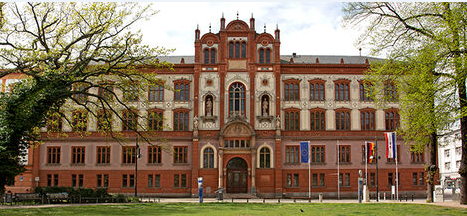
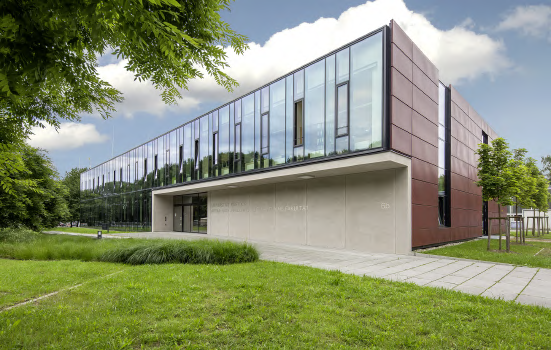



The University of Rostock offers a diverse, varied and challenging position in a tradition-conscious, yet innovative, modern and family-friendly university in a lively city by the sea.
At the Faculty of Mathematics and Natural Sciences, Institute of Physics, group ultrafast molecular physics, subject to allocation of funds, we are filling the following position at the earliest possible date on a temporary basis ending on 31.12.2029:
Research Assistant (m/f/d) - experimental physics

at the earliest possible date

part-time with 30 hours


P 109/2026
Please do not hesitate to contact us for further information:
Kati Barth
Phone number: 0381/498-1312
Dr. Franziska Fennel
Phone number: 0381/498-6966
E-mail: franziska.fennel@uni-rostock.de
The research conducted within the Emmy Noether Junior Research Group “ultrafast molecular physics” focuses on investigating ultrafast processes in molecules induced by intense laser pulses. The successful candidate will work with state-of-the-art femtosecond laser systems and use them to investigate strong-field effects, in particular high-harmonic generation in organic molecular crystals.
High-harmonic generation is employed as a powerful spectroscopic technique to investigate ultrafast electron dynamics in matter. These dynamics occur on timescales shorter than a single oscillation period of the applied light field. To this end, intense light pulses with electric field strengths of approximately 1 volt per ångström and wavelengths in the range of 4 micrometers are used. The strong light field controls the motion of electrons in matter. When the electrons subsequently scatter, high-energy photons are emitted whose properties provide information about the material, electron dynamics, and electronic structure.
High-harmonic generation has so far been studied primarily in isolated quantum systems and in solids. In our research, we extend this technique to organic molecular crystals, which have significant potential for applications in organic electronics, for example in solar cells, light-emitting diodes, and organic transistors. In molecular crystals, the interaction between neighboring molecules plays a central role. These intermolecular interactions enable particularly long electron trajectories and consequently lead to the generation of intense, high-energy harmonics.
Together with our collaborators, we recently demonstrated that intermolecular interactions are crucial for high-harmonic generation in organic molecular crystals (Nat. Commun. 16, 9890 (2025)). The aim of the advertised position is to resolve these processes using even shorter laser pulses and thereby experimentally investigate electron dynamics on timescales comparable to the optical oscillation period of the light field.
The successful candidate will acquire extensive knowledge and hands-on experience in the fields of nonlinear optics, molecular physics, strong-field physics, and attosecond physics. In addition, the position offers access to state-of-the-art laboratories and laser systems, as well as the opportunity to work closely with experienced scientists, PhD students, and undergraduate and graduate students. The successful candidate will join an interdisciplinary research environment characterized by an open, collegial, and supportive group atmosphere.
THESE ARE YOUR TASKS:
- conduct research in the field of strong-field molecular spectroscopy of organic molecular crystals. In particular, generate ultrashort mid-infrared (MIR) laser pulses and use these pulses in strong-field experiments on organic molecular crystals, with the aim of pursuing scientific qualification (PhD).
- develop and set up experiments in the laboratory, analyze measurement data, and interpret the results.
- prepare and characterize organic molecular crystals
- contribute to scientific organizational tasks and publish research findings
- research-based instruction of specialized knowledge and skills to students in the field of the project topic, with the primary aim of guiding students to conduct independent scholarly work
THIS MAKES YOU A GOOD FIT:
- completed university degree (State Examination, Diploma, Master’s degree, or equivalent) in physics, photonics, or a related field, preferably with an excellent academic record
- very good knowledge of and initial experience in nonlinear optics, molecular physics, strong-field physics, and laser physics.
- experience in experimental research, particularly with femtosecond lasers and optical setups, is desirable.
- good command of English, both written and spoken, as well as basic knowledge of German or a willingness to acquire the necessary German language skills within a short period of time.
- good communication skills, particularly for presenting research findings.
- a strong commitment to and motivation for pursuing a scientific qualification (PhD).
- ability to work positively and constructively with a diverse group of people of different backgrounds, nationalities, ethnicities, genders, and other characteristics.
- ability to work independently, with concentration and a goal-oriented approach, as well as effectively as part of a team.
- sufficient physical fitness for laboratory work.
WE AS AN EMPLOYER:
Equal opportunities are important to us. We welcome applications from suitable severely disabled people or people from traditionally underrepresented groups. We aim to increase the proportion of women in research and teaching and therefore encourage suitably qualified women to apply. We welcome applications from people of other nationalities or with a migration background.
WE OFFER YOU:
FURTHER INFORMATION:
We will determine the experience level individually, taking into account your previous professional experience.
The temporal limitation of the employment relationship is based on § 2 (1) Wissenschaftszeitvertragsgesetz.
We look forward to receiving your application (cover letter, CV, degree certificate stating your final grade) by 15.10.2026 at the latest. We can only consider applications received via our homepage. Please send us your documents via the ‘Online application’ button at the end of a job offer. Unfortunately, we cannot accept e-mail applications.
Incomplete application documents may not be considered in the further course of the selection process.
Unfortunately, we can not cover application and travel costs.
Become part of the team
We look forward to receiving your application!
Contact
Universität Rostock
18051 Rostock
Tel.: +49 381 498 - 0
Sitze des Rektorats:
Universitätsplatz 1
18055 Rostock
Certificates
Familienfreundliche Hochschule HRK-Audit
 Facebook
 You Tube
 Instagram