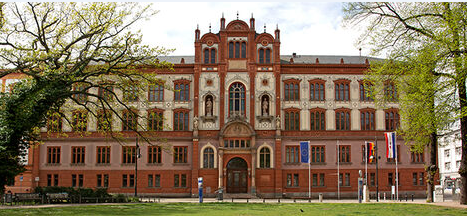

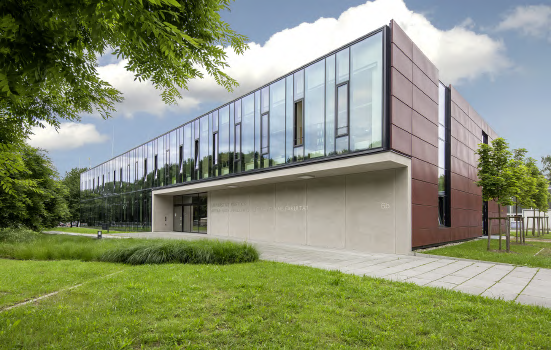


The University of Rostock offers a diverse, varied and challenging position in a tradition-conscious, yet innovative, modern and family-friendly university in a lively city by the sea.
At the Faculty of Computer Science and Electrical Engineering, Institute for Applied Microelectronics and Computer Engineering, Chair of embedded systems, subject to allocation of funds, we are filling the following position at the earliest possible date on a temporary basis for the duration of the project "SFB 1270 ELAINE: B03" ending on 30.06.2029:
Research Assistant (m/f/d) - Energy-Efficient Signal Processing for Electrically Active Implants

at the earliest possible date

full-time with 40 hours


W 113/2026
Please do not hesitate to contact us for further information:
Franziska Schreier
Phone number: 0381/498-1320
E-mail: franziska.schreier@uni-rostock.de
Prof. Christian Haubelt
Phone number: 0381/498-7280
E-mail: christian.haubelt@uni-rostock.de
The Collaborative Research Centre 1270 ELAINE – ELectrically Active ImplaNts investigates implants that electrically stimulate tissue. The research covers the mechanisms of electrical stimulation in bone and cartilage as well as deep brain stimulation as a treatment for Parkinson's disease and dystonia. The aim is a closed-loop form of stimulation in which the implant itself monitors the course of the disease and adapts accordingly. This brings together researchers from electrical engineering, computer science, mechanical engineering, biology and medicine in a genuinely interdisciplinary endeavour.
THESE ARE YOUR TASKS:
- Development and optimisation of energy-efficient signal processing for electrically active implants within the Collaborative Research Centre (CRC) 1270 ELAINE, with a focus on realising a closed control loop for optimising electrical stimulation
- Analysis of suitable signal processing and AI algorithms with respect to energy demand, latency and hardware suitability, and derivation of optimisations at the algorithmic level
- Investigation of hardware-software partitioning along the entire processing chain – from preprocessing and feature extraction through to inference
- Design and implementation of dedicated hardware accelerators for on-implant processing of sensor data and inference algorithms
- Modelling of the developed accelerators at register-transfer and transaction level and their integration into a virtual prototype for the assessment of functional and extra-functional properties
- Close interdisciplinary collaboration with the medical, biological and engineering subprojects of the Collaborative Research Centre
- Publication of research results in relevant journals and at international conferences
- Working on a Ph.D. in the field of energy-efficient signal processing for electrically active implants
- Supervision of student theses
THIS MAKES YOU A GOOD FIT:
- completed university degree (Diplom, Master's or equivalent) with preferably very good, at least a good grade in electrical engineering, information technology, computer engineering, computer science, medical information technology or a related field
- sound knowledge of digital circuit design, ideally with practical experience in a hardware description language (VHDL or Verilog)
- knowledge of low-level programming of embedded systems, particularly in C and C++
- basic knowledge of digital signal processing as well as an interest in machine learning methods and their resource-efficient implementation
- an understanding of the interplay between algorithm, computing architecture and energy demand
- willingness to collaborate across disciplines with partners from medicine, biology and other engineering fields
- an independent, structured way of working and an interest in pursuing a doctorate
- proficiency in English, both written and spoken; a knowledge of German is an advantage
WE AS AN EMPLOYER:
Equal opportunities are important to us. We welcome applications from suitable severely disabled people or people from traditionally underrepresented groups. We aim to increase the proportion of women in research and teaching and therefore encourage suitably qualified women to apply. We welcome applications from people of other nationalities or with a migration background.
WE OFFER YOU:
FURTHER INFORMATION:
We will determine the experience level individually, taking into account your previous professional experience.
If you would like to work part-time in this position, this is possible subject to the requirements of the position.
The temporal limitation of the employment relationship is based on § 2 (1) Wissenschaftszeitvertragsgesetz.
We look forward to receiving your application (cover letter, CV, degree certificate stating your final grade) by 28.09.2026 at the latest. We can only consider applications received via our homepage. Please send us your documents via the ‘Online application’ button at the end of a job offer. Unfortunately, we cannot accept e-mail applications.
Incomplete application documents may not be considered in the further course of the selection process.
Unfortunately, we can not cover application and travel costs.
Become part of the team
The Institute of Applied Microelectronics and Computer Engineering conducts teaching and research in the field of specialised hardware/software systems. It is one of the pillars of the Faculty of Computer Science and Electrical Engineering at the University of Rostock in exploring novel approaches to realising computing systems. With almost 30 researchers, the institute offers a dynamic environment for contemporary research questions across a wide range of areas such as medical engineering, 5G and 6G communication, wearables and industrial automation.
We look forward to receiving your application!
Contact
Universität Rostock
18051 Rostock
Tel.: +49 381 498 - 0
Sitze des Rektorats:
Universitätsplatz 1
18055 Rostock
Certificates
Familienfreundliche Hochschule HRK-Audit
 Facebook
 You Tube
 Instagram