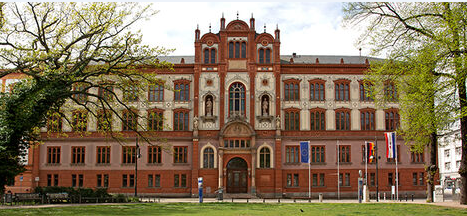
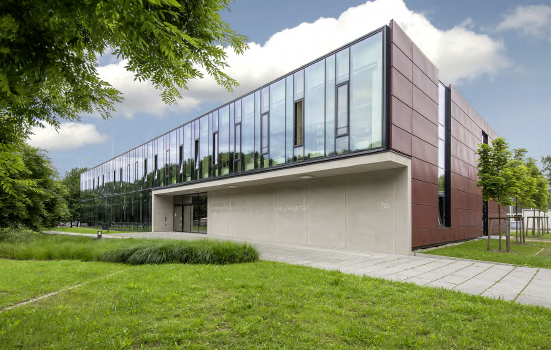


The University of Rostock offers a diverse, varied and challenging position in a tradition-conscious, yet innovative, modern and family-friendly university in a lively city by the sea.
At the Faculty of Mathematics and Natural Sciences, Institute for Life Sciences, Chair of Marine Biology, subject to allocation of funds, we are filling the following position as of 01.10.2026 on a temporary basis for the duration of the project "MitoCARB" ending on 30.09.2029:
Research Assistant (m/f/d) - Ecophysiology of Marine Animals

as of 01.10.2026

part-time with 26 hours


P 55/2026
Please do not hesitate to contact us for further information:
Lisa Malke
Phone number: 0381/498-1281
E-mail: lisa.malke@uni-rostock.de
Prof. Dr. Inna Sokolova
Phone number: 0381/498-6050
E-mail: inna.sokolova@uni-rostock.de
We are seeking a highly motivated PhD candidate for the interdisciplinary research project MitoCARB at the interface of ecological physiology, biochemistry, and molecular biology. The project focuses on the role of reactive carbonyl species (RCS), particularly methylglyoxal (MG), in the metabolic regulation and stress responses of marine bivalves.
This PhD project offers the opportunity to work on an innovative and highly relevant topic in evolutionary and comparative physiology as well as global change biology. Using the model organisms Mytilus edulis and Crassostrea gigas, the project aims to understand how RCS contribute to the exceptional metabolic flexibility and stress tolerance of these species.
A particular focus is placed on the effects of temperature and hypoxia on aerobic and anaerobic metabolism, as well as on the dual role of RCS as both damaging by-products and signaling molecules in stress adaptation.
THESE ARE YOUR TASKS:
- research leading to a doctoral degree (Ph.D.)
- work in a cutting-edge research field on the role of reactive carbonyl species in cellular stress responses
- investigate of mechanisms of adaptation to climate-related stressors
- integrate approaches at various organizational levels (from molecules to the whole organism)
- collect mussels and oysters from intertidal and subtidal habitats and rearing them under controlled aquarium conditions
- apply biochemical, physiological, molecular biological, and multi-omics methods (metabolomics, proteomics)
- perform mitochondrial and metabolomic analyses to identify adaptive mechanisms
- analyze complex datasets using modern statistical and bioinformatics methods
- present results at international conferences and publishing in peer-reviewed journals
- collaborate within an interdisciplinary research team
- co-supervise and mentor students in close collaboration with Prof. Inna Sokolova
THIS MAKES YOU A GOOD FIT:
- completed university degree (state exam, diploma, master's degree or comparable degree) in biology, biochemistry, marine biology, or a closely related field with preferably good results
- well-founded knowledge in at least one of the following areas: physiology, biochemistry, or molecular biology; knowledge of marine biology or ecological physiology is an advantage
- demonstrable practical experience in experimental work, ideally in physiological, biochemical, or molecular biology laboratories
- experience with at least one of the following approaches is desirable: metabolic analyses, mitochondrial function, proteomics/metabolomics, or related methods
- solid skills in data analysis and statistics, with an interest in bioinformatics approaches
- willingness to work with marine organisms under experimental conditions (including fieldwork and aquarium maintenance)
- minimum physical aptitude for fieldwork in coastal and intertidal zones, including working on wet and slippery surfaces, in changing weather conditions, and carrying equipment in the field
- excellent written and spoken English
- willingness to work seriously and with commitment on a project of one's own scientific qualification
- high level of self-motivation, a structured and independent work style, and strong teamwork skills
WE AS AN EMPLOYER:
Equal opportunities are important to us. We welcome applications from suitable severely disabled people or people from traditionally underrepresented groups. We aim to increase the proportion of women in research and teaching and therefore encourage suitably qualified women to apply. We welcome applications from people of other nationalities or with a migration background.
WE OFFER YOU:
FURTHER INFORMATION:
We will determine the experience level individually, taking into account your previous professional experience.
The temporal limitation of the employment relationship is based on § 2 (1) Wissenschaftszeitvertragsgesetz.
We look forward to receiving your application (motivation letter including research interests, CV, academic transcripts and relevant certificates, and contact details of two referees) compiled into a single PDF file by 01.06.2026 at the latest. We can only consider applications received via our homepage. Please send us your documents via the ‘Online application’ button at the end of a job offer. Unfortunately, we cannot accept e-mail applications.
Incomplete application documents may not be considered in the further course of the selection process.
Unfortunately, we can not cover application and travel costs.
Become part of the team
The Marine Biology group at the University of Rostock is an international and interdisciplinary team studying the adaptation and biodiversity of marine benthic organisms. Our research integrates ecological, physiological, and molecular approaches to understand how marine invertebrates respond to multiple environmental stressors.
We offer a collaborative and supportive working environment, excellent laboratory and field facilities, and strong national and international collaborations—providing an inspiring setting for early-career researchers.
Contact
Universität Rostock
18051 Rostock
Tel.: +49 381 498 - 0
Sitze des Rektorats:
Universitätsplatz 1
18055 Rostock
Certificates
Familienfreundliche Hochschule HRK-Audit
 Facebook
 You Tube
 Instagram